A PRACTICAL PACKAGING GUIDE
Alternatives to
plastic six-pack rings.
Molded fiber carriers and paperboard carriers are options to compare with plastic can rings. For SugarCaneRings, the material starts with sugarcane bagasse. The right choice also depends on your cans, packing process and local disposal options.
From SugarCaneRings · Updated October 4, 2026
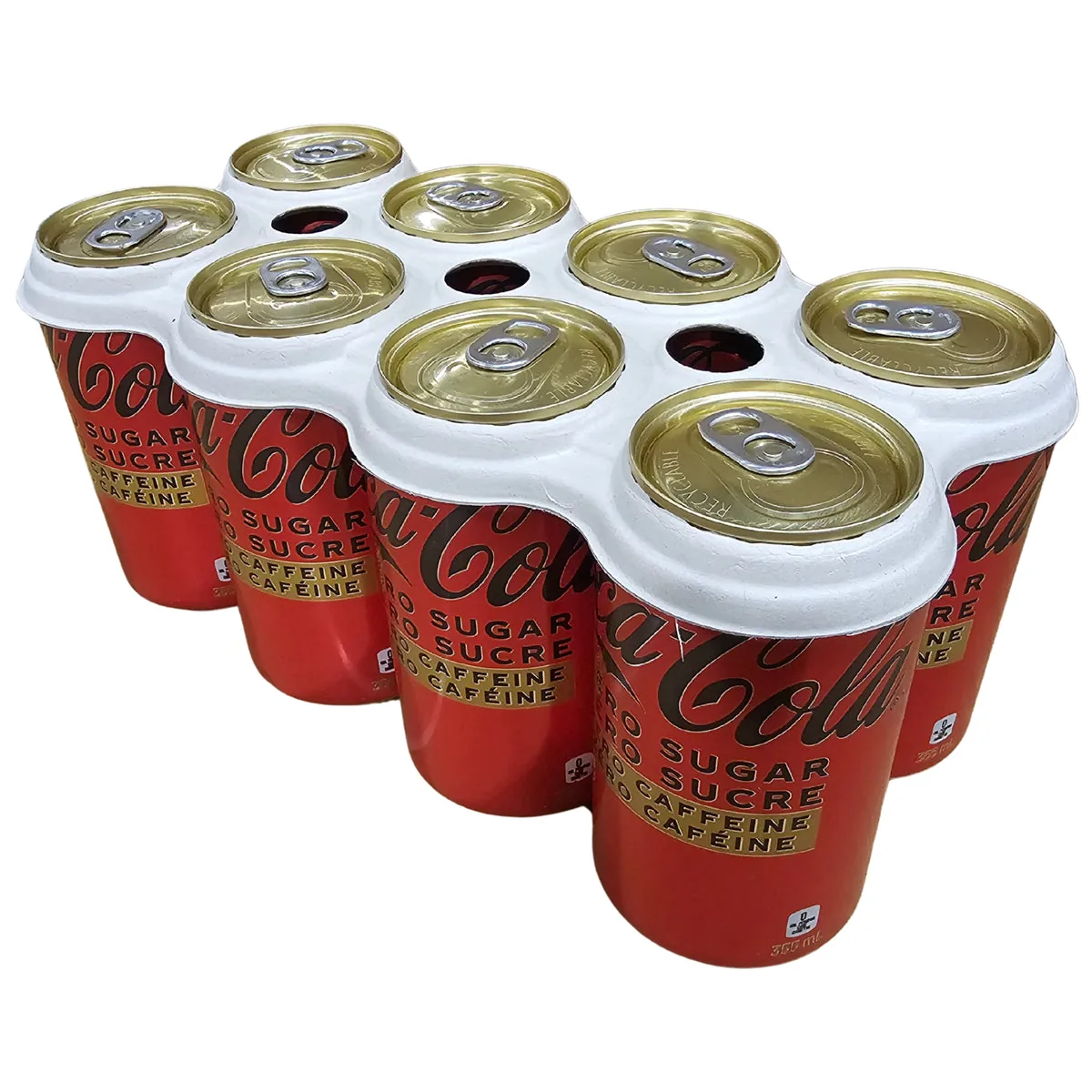
Compare the complete packing setup
Start with the can drawing, number of cans per pack and intended application method. Then check the finished carrier with your own filled cans. A material name alone does not establish a fit, measured environmental benefit or local disposal acceptance.
What are the plastic rings around cans called?
They are commonly called six-pack rings, 6-pack rings, plastic can rings or beer can rings. Broader terms include beverage can carriers, can holders and multipack carriers. Four-pack and eight-pack rings perform the same grouping role with different numbers of can openings.
“Can holder” can also mean a drink sleeve or vehicle cup holder. For purchasing multipack packaging, specify the number of cans, the carrier material and the can dimensions.
What is different about sugarcane rings?
Our can carriers use molded sugarcane fiber rather than the conventional plastic ring format. Bagasse is the fibrous material remaining after sugarcane juice extraction. Using it in packaging gives that by-product another application. USDA explains the origin of bagasse.
The SugarCaneRings range includes 4-pack rings, 6-pack rings and 8-pack rings, each supplied as 500 carriers per box. Our images show design visualizations, and final specifications should be confirmed with the seller.
| Carrier option | What to compare | Before switching |
|---|---|---|
| Plastic can rings | Flexible ring carriers and rigid plastic can carriers are different formats. | Identify your current ring geometry, material and applicator settings. |
| Molded sugarcane fiber rings | Bagasse-based molded carriers, including our 4-, 6- and 8-pack designs. | Confirm composition, can retention, moisture performance and application method for the finished carrier. |
| Paperboard can carriers | Paperboard multipack formats are another category of alternative; they are not the same product as our molded fiber rings. | Check the board specification, coatings, can fit and handling requirements with that supplier. |
Five questions to ask before changing can rings
- Will it fit? Share the can rim diameter and drawing. A volume label does not establish fit.
- How will it be applied? Check hand application or the exact applicator model and settings.
- How does the filled pack perform? Trial lifting, transport, refrigeration and condensation under your actual conditions.
- What is in the material? Request the finished composition and any coatings or additives.
- What happens after use? Match product instructions and verified certifications with local facility acceptance.
Does “eco-friendly” mean biodegradable or compostable?
No. For this range, the supported material benefit is using fiber from a renewable crop’s by-product. That does not establish that the complete carrier is certified compostable, recyclable everywhere, plastic-free or safe to litter.
Claims about breakdown conditions, carbon savings or compostability need product-specific evidence. No product-specific compostability certification or measured carbon reduction has been verified here. BPI’s certified-product catalog is a resource for checking documented certification. The EPA’s materials guidance explains why local acceptance matters.
Buying can rings in bulk
For this range, “500 rings per box” means 500 complete multipack carriers, not 500 individual can openings. A 4-pack box groups 2,000 cans; a 6-pack box groups 3,000; an 8-pack box groups 4,000, before allowances for setup or handling losses.
Buy 8-pack sugarcane rings at LiquorStoreProducts.com. Ask us about availability, pricing and final fit for the four-pack and six-pack designs.